Opening article
GPT-6 and Intelligent UI for everyone
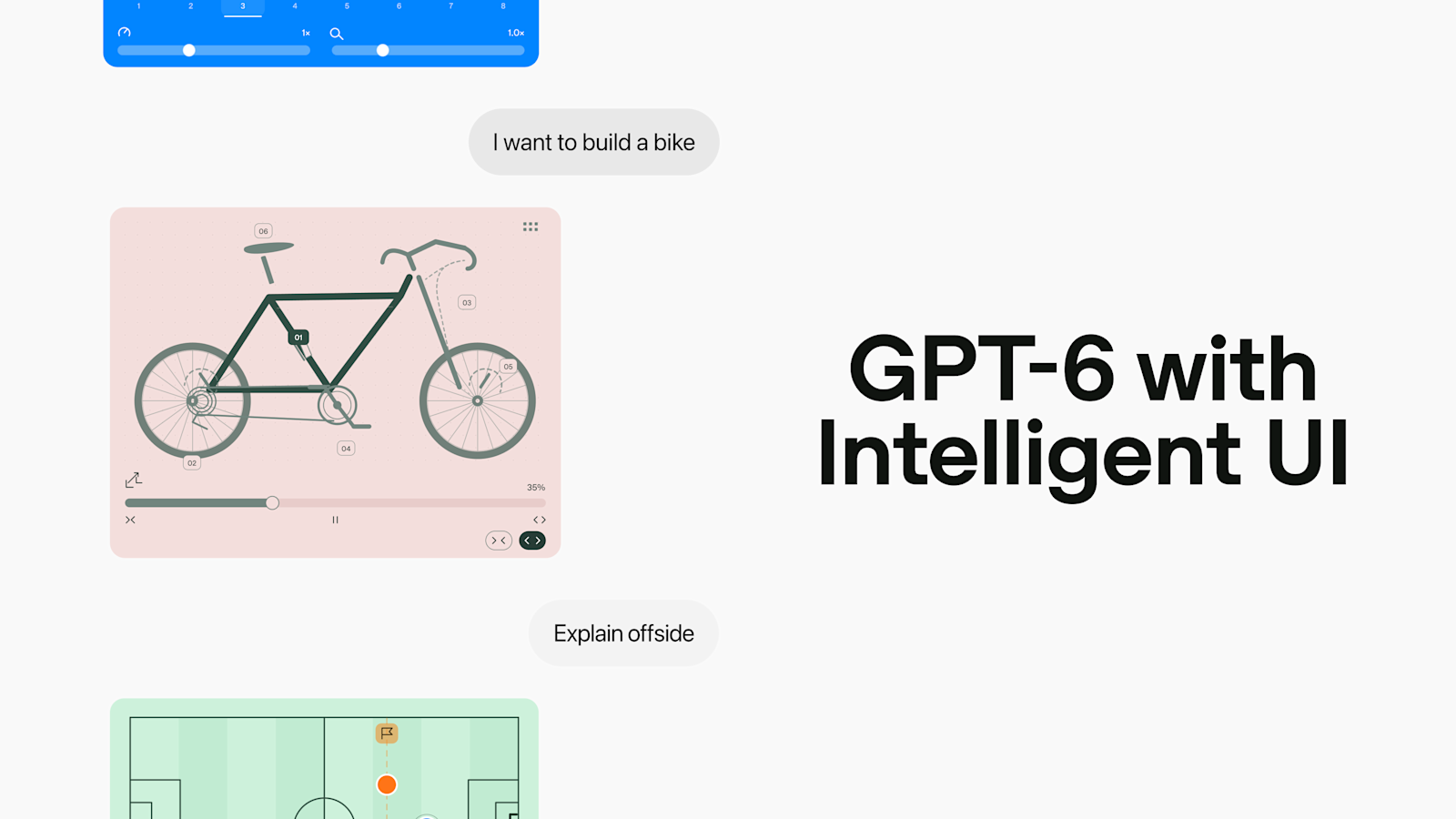
GPT‑6 is rolling out globally in ChatGPT with Intelligent UI, delivering faster responses with visuals and interactive experiences you can explore and use directly. Last month we introduced the first GPT‑6 models for paid customers and today we're bringing that next generation of intelligence to more people with a new GPT‑6 model built for more than 1.2 billion people who use ChatGPT each week. GPT‑6 in ChatGPT introduces Intelligent UI, a new capability that allows ChatGPT to answer quickly with fully interactive user interfaces that make everyday answers more visual, make learning complex topics easier and that can quickly create a tool to solve a task right in the moment.
Model Size
2 BILLION
Dense ParametersBenchmark Metric
44%
Reported Accuracy / GainAccess Mode
API & Platform
Managed Enterprise CloudThe Core Development
Last month we introduced the first GPT‑6 models for paid customers and today we're bringing that next generation of intelligence to more people with a new GPT‑6 model built for more than 1.2 billion people who use ChatGPT each week.
GPT‑6 in ChatGPT introduces Intelligent UI, a new capability that allows ChatGPT to answer quickly with fully interactive user interfaces that make everyday answers more visual, make learning complex topics easier and that can quickly create a tool to solve a task right in the moment.
We’ve trained GPT‑6 to compose responses using text, visuals and interactive elements, choosing how they fit together based on your question. With Intelligent UI, responses can include graphics, tappable buttons, forms, charts, and interactive experiences you can use directly in your conversation.
Real-World Use Cases & Applications
As we bring more intelligent AI to more people, we work to improve how it recognizes real-world risks, how honestly it responds, and how well it respects the limits that people set. GPT‑6 makes progress in each of these areas, building on several of Astra’s safety advances to better resist attempts to bypass its safety training, follow safeguards, and be clearer about what it can and can’t do relative to GPT‑5.6 Sol. We updated its safety training based on lessons from real-world use to strengthen protections against high-risk misuse involving cyberattacks, biological threats, and violence. In adversarial testing, GPT‑6 showed stronger resistance to attempts to bypass its safety training, particularly attacks that adapt across multiple turns. GPT‑6 is also trained to respond safely in higher-risk scenarios while avoiding unnecessary refusals of harmless requests. This includes using conversation history and relevant context to recognize risks that may not be apparent from a single prompt.
Deployment & Availability
The format depends on what you’re asking. A comparison might work best side by side. An explanation might be easier to understand through an interactive diagram. And when a simple text answer is the most useful response, ChatGPT can give you that.
There's still work ahead to improve the model's design judgment and expand what it can create, but Intelligent UI marks a significant shift in how people interact with ChatGPT. Instead of fitting every question into the same conversational format, ChatGPT can combine UI, data, and actions to create entirely new ways for people to explore, understand, and interact with information.
GPT‑6 with Intelligent UI starts rolling out globally to ChatGPT Plus, Pro, Business and Enterprise tiers today in the Chat tab. Starting tomorrow, the rollout expands to Free and Go tiers. Enterprise availability depends on workplace admin settings.
Strategic Perspective & Ecosystem Impact
ChatGPT can make a plan easier to follow by showing how it fits together. The timing for a Sunday roast can sit alongside the recipe, or the stops on a road trip can appear on a map, with notes on what’s worth a detour.
Visual and interactive explanations let you explore how something works, change an input to see what happens, or work through a problem step by step.
You can also ask ChatGPT to create a tool for the task at hand, such as a calculator to explore how savings could grow, a bill splitter for dinner with friends, or a game you can play in the conversation.
Why it matters
GPT‑6 is rolling out globally in ChatGPT with Intelligent UI, delivering faster responses with visuals and interactive experiences you can explore and use directly Reported by OpenAI on October 7, 2026.
Topic dossiers OpenAI